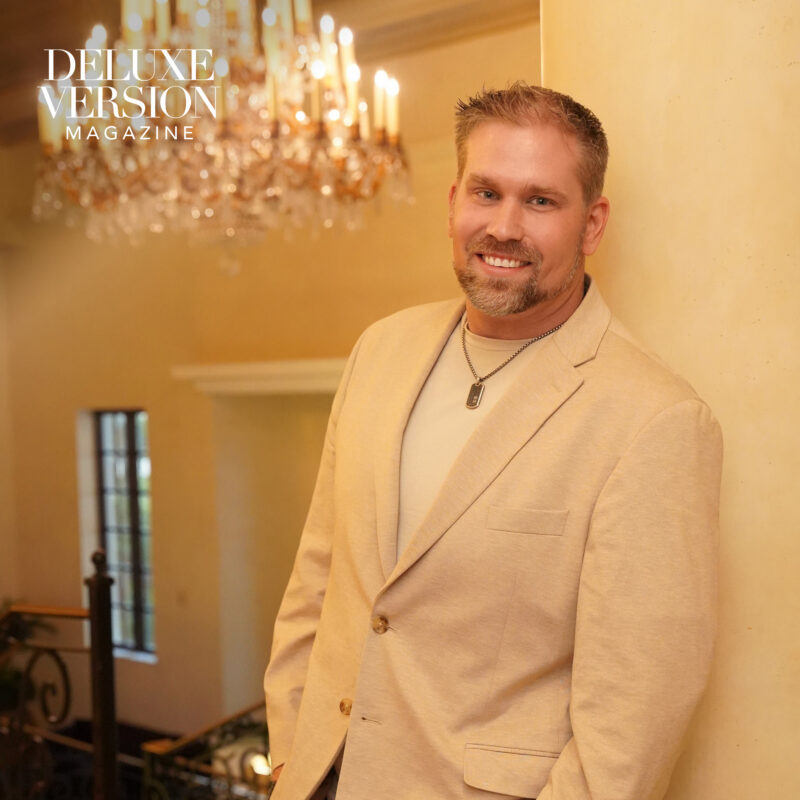
Heath Gagné Is Building TribeLife For A World Of Connection Beyond Screen-time
The founder of TribeLife believes the next evolution of technology will not be measured by how much attention it captures, but by how effectively it helps people build relationships, opportunities, healthier lives, and stronger communities in the real world.
Technology has promised to make the world more connected. In many ways, it succeeded. People can reach thousands with a single post, professional networks cross continents, and communities form almost instantly around shared interests. Yet somewhere along the way, connection and community stopped meaning the same thing.
Heath Gagné saw the contradiction clearly. Through his experiences as a Marine, entrepreneur, event producer, developer, and relationship-driven business leader, Gagné witnessed that life’s most consequential opportunities rarely begin with an algorithm. They begin when people show up for one another. That realization became the foundation for **TribeLife**, a technology platform built around a simple philosophy: the phone should be the front door, not the destination.
Rather than competing for another hour of a user’s attention, TribeLife is designed to help people discover individuals, professionals, businesses, events, communities, and experiences that can add value to their lives, then encourage those discoveries to move beyond the screen. Gagné describes the philosophy as “less performance, more presence; less scrolling, more living.”
“The phone should be the front door, not the destination.” — Heath Gagné, Founder of TribeLife
Gagné did not set out to create another social network. He saw how easily technology could create reach without creating relationships, with follows being treated like friendships, engagement like belonging, and attention like community. Building an alternative required him to self-fund an ambitious platform while carrying the responsibilities of founder, owner, developer, and agency leader. There were moments when following the established social-media playbook would have been easier, but doing so would have moved TribeLife further from its purpose.
The industry’s prevailing model encourages endless content, instant validation, and prolonged engagement. TribeLife asks a different question: What if the product isn’t more screen time, but a better life beyond the screen? Gagné began seeing the answer in the real world as events generated relationships, introductions became partnerships, and connections created opportunities. He questioned the roadmap at times, but never the need. People did not need another reason to scroll. They needed better reasons to show up.

Trust is central to that mission. In TribeLife’s earliest stages, Gagné approached community building one conversation, introduction, event, and kept promise at a time. Community comes before vanity metrics, members are participants rather than inventory, and growth cannot come at the expense of culture. TribeLife’s Verified membership model reinforces identity and accountability, but Gagné is careful not to confuse verification with character. Technology can confirm identity; behavior still determines trust. As he explains, “Trust is not a feature you launch. It is a promise you keep.”
Artificial intelligence presents another opportunity to advance that philosophy. **Nexus AI**, TribeLife’s artificial intelligence layer, is envisioned as a tool to help members discover professionals, collaborators, events, communities, causes, and experiences aligned with their interests and goals. AI can recognize potential alignment and facilitate discovery, but Gagné believes it should then step back. Technology cannot manufacture chemistry, friendship, trust, or meaning. AI can help someone find the right room; it cannot create what happens inside it.
As TribeLife expands, Gagné also wants the platform to preserve the character of individual communities. Technology can scale globally, but trust remains local. Las Vegas should feel like Las Vegas, with local businesses, creators, professionals, venues, organizations, and leaders helping shape the experience. Success, therefore, cannot be measured solely through membership, revenue, activity, or reach. The greater standard is whether TribeLife becomes more useful, credible, and human as it grows.
That philosophy extends into TribeLife’s focus on health, wellness, and longevity. For Gagné, living well cannot be reduced to products, treatments, protocols, exercise, or lifespan. People also need to feel supported, connected, inspired, and part of something. Community belongs in the longevity conversation.
Five years from now, he envisions TribeLife becoming trusted infrastructure for meaningful local connection. Someone arriving in a new city could find a trusted professional, event, community, friend, or collaborator without feeling as though they were starting alone. Businesses could grow through reputation and relationships rather than depending entirely on algorithms. Creators could transform audiences into communities, nonprofits could reach people ready to contribute, and events could become the beginning of lasting friendships and partnerships.
Gagné’s definition of entrepreneurial success has evolved alongside that vision. Earlier in his career, success meant revenue, recognition, scale, and evidence that an idea worked. Those measurements still matter, but the question has changed from **How big can this become?** to **What does this make possible?** Scale, he believes, simply amplifies whatever a system values. Platforms that reward comparison, outrage, or addiction magnify those behaviors. Platforms that reward contribution, trust, and participation can magnify something more meaningful.
“Success used to mean building something big. Now it means building something worth belonging to.” — Heath Gagné, Founder of TribeLife
That thinking also points toward **The Human Legacy Project**, a future expression of Gagné’s mission. The concept imagines technology preserving more than photographs by capturing a person’s voice, stories, values, memories, advice, and wisdom for future generations. It is about preserving the person, not simply evidence that they were here.
Ultimately, Gagné does not want TribeLife’s legacy measured by downloads, valuations, or engagement statistics. He wants it found in the friendships formed, businesses launched, opportunities shared, communities strengthened, causes supported, and lives redirected because the right people found one another at the right moment. If TribeLife succeeds, people may remember the lives it brought together far more than the technology behind it.