An Exclusive Look At Duck Duck Shed 4.0
It could be a set-up to a familiar joke: seven showgirls, a magician, an Elvis wardrobe expert, an explosion expert and a madam walk into a Las Vegas conference.
But leave it to the Neon Museum to deliver the punchline: Duck Duck Shed!
No, it’s not a new take on the old children’s party game, Duck Duck Goose. Duck Duck Shed is the fourth annual architecture, design and culture event series taking place Oct. 23-26 throughout the city.
(For inquiring minds, “Duck” is architecture that can be described just by its shape, i.e. The Sphere; “Shed” requires a sign to identify it, i.e. Four Queens).
With 41 programs planned in five days, Neon Museum Executive Director/CEO Aaron Berger and his extraordinary team have assembled an ambitious lineup of Sin City specialists to educate people on-all-things Las Vegas.
“We’re the only museum in the country—potentially the world that we know of—that has its own conference,” said Berger. “This is a deep dive into what makes Las Vegas the most unique city in the world. It’s a circus tent of a town, but it is the most thoughtful and intentional city, really.”
In other words, if this nonprofit had its own gala, Berger says this would be it. And this could be the year Duck Duck Shed officially becomes to Las Vegas what South By Southwest is to Austin, Texas.
“We’re going to cut through the legend and the lore, and you’re going to get true scholarship. But we never forget it’s Vegas, baby,” said Berger. “It’s really a very broad program that allows people to just see Las Vegas in a new perspective.”
The event calendar reads like a quintessential Las Vegas history lesson: there will be seven legendary showgirls (now sold out!); the magic man behind illusion building; the foremost expert on Strip architecture; and “The Implosion Guy,” just to name a few.
Berger—a self-described outsider who moved to Vegas just five years ago—has done his research as both museum director and ultimate fan. He’s eager to interview former Las Vegas madam and now author Jami Rodman about an “often-overlooked chapter of the city’s social history: companionship in Las Vegas.”
“It feels a little taboo, and I love that. I think it’s actually the job of museums to push the envelope and to have programs that create conversation.”
And that includes “Curating Rhythm & Resilience: History, Art, and Legacy in Black Las Vegas” with curator Carmen Beals.
“I never in a million years thought about segregation or integration in Las Vegas,” admits Berger. “In my mind, I was naive enough to think that the only color that mattered in Las Vegas was green.”
For Lance Rich, magician and author of NEON DREAMS, the story of Las Vegas magic has fascinated him since he was a teen.
“Los Angeles is a place you go to be a TV star or a movie star; you go to New York to be a Broadway star. As a kid who loves show business, I knew there was this place called Las Vegas, and you go there to be a magic star,” said Rich.
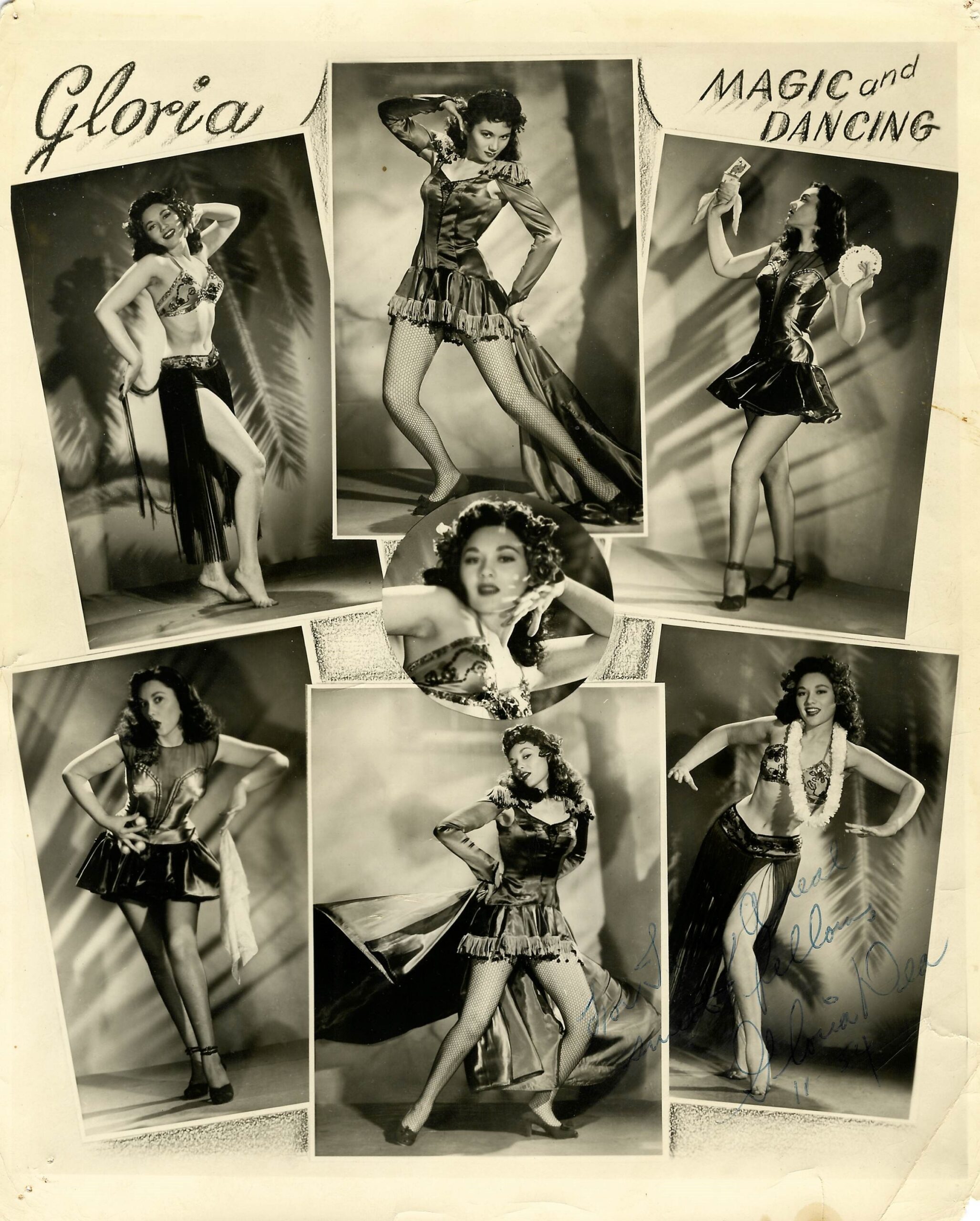
Rich says he’ll discuss the evolution of magic, from 18-year-old Gloria Dae—the very first magician to perform in a Las Vegas hotel and casino—to the magicians famously synonymous with the Strip.
“The Mirage obviously was a game changerand Siegfried and Roy were a big part of that.Beyond that, their show was a spectacle; unlike anything that had been there,” said Rich. “I don’t think you get Cirque du Soleil without Siegfried and Roy.”
Rich says while the scene is constantly changing, Las Vegas and magic will always go hand in sleight of hand.
“This is a kind of a cliche thing, but peanut butter and jelly just go together. Somebodystarted it. I hope you’re going to see how, in this case, Vegas and magic came to be a pair.”
Of course, no examination of Las Vegas’ entertainment history would be complete without the King himself, Elvis Presley.
Costume historian Karan Feder’s new book “Elvis: Dressed to Rock, The Hidden History of the King’s Closet” reveals her research “about his iconic wardrobe on the very stage it was both designed for and worn on.”
Her talk includes an exclusive backstage tour of the International Theater at Westgate Las Vegas Resort & Casino where Elvis performed for seven years.
“So recognizable is Elvis’s visual identity, that its development and evolution typically go unquestioned. Elvis: Dressed to Rock explores the entertainer’s stage costumes during the final chapter of his career, in proper historical context in order to discover why particular design elements and garments likely materialized,” said Feder.
“I hope that my audience discovers the significance of the behind-the-curtain artisans responsible for stitching together the visual identity of a superstar.”
Keep an eye out for designer Bill Belew’sCisco Kid Jumpsuit, Feder’s pick for “most visually effective costumes.”
There is so much more in store, but on the final night, Duck Duck Shed will culminate with a nod to the present when the museum unveils the FORMULA 1 HEINEKEN LAS VEGAS GRAND PRIX sign.
“I really want everyone to walk away with a better appreciation of how this city has worked to reinvent itself over the decades,” said Berger. “Even though it’s relatively young, it has reinvented itself 150 times. But also, this city’s not going anywhere.”
For more information, visit neonmuseum.org.