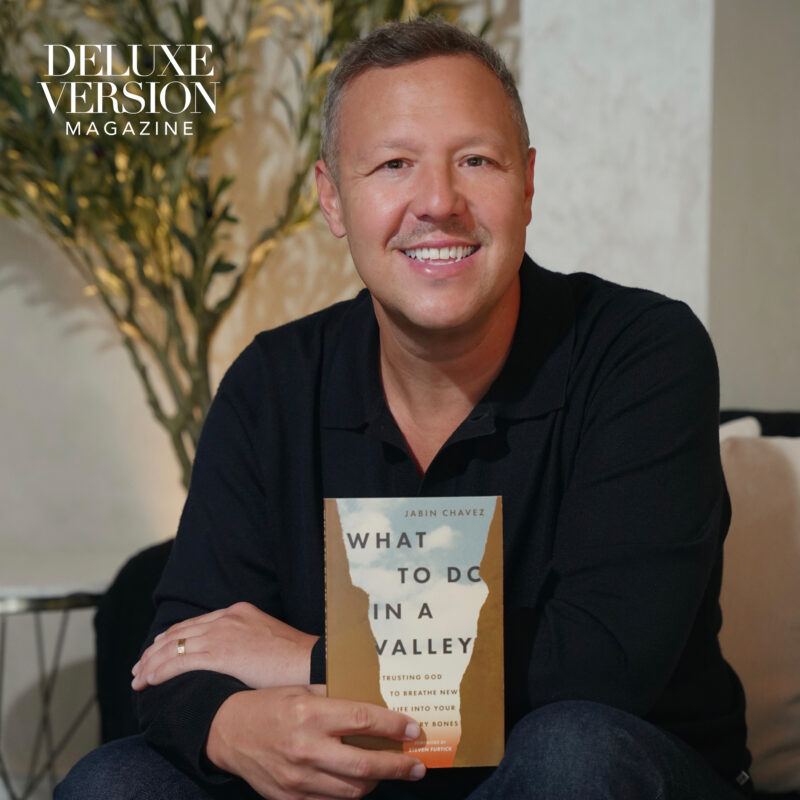
Jabin Chavez: Finding Purpose in the Valley
Success is often measured by the mountaintops: the breakthrough, the promotion, the moment when years of work finally become visible. But for Pastor Jabin Chavez, some of life’s most important transformation happens far from the summit.
In his book What to Do in a Valley, Chavez turns his attention toward the seasons most people would rather escape. Drawing from Psalm 23, his personal journey and years of walking alongside people through grief, uncertainty and disappointment, Chavez presents the valley not as a permanent destination, but as a place where faith can deepen and purpose can become clearer.
“Every person has been in a valley and is currently in a valley,” Chavez says. “But here is what I know: valleys come and valleys go.”
That perspective sits at the heart of the book. Rather than encouraging readers to simply pray for difficult circumstances to disappear, Chavez challenges them to consider what God may be developing within them while those circumstances remain.
“I have learned that the best prayer to pray is not, ‘Get me out of this,’ or, ‘May I never go through a valley.’ The best prayer to pray is, ‘Lord, do something amazing in me while I am in this valley.’”
It is a lesson Chavez says he learned through experience rather than theory. He readily acknowledges that he has never enjoyed challenging seasons, but looking back, he can see how those moments shaped him. “God has used every one of them to grow me, mature me and make me more like Him.”
Psalm 23 has provided comfort to believers for generations, but Chavez sees within its familiar words something more than reassurance. He sees a framework for navigating life’s uncertainty. One of the most powerful lessons, he says, comes from David’s declaration that he will not fear while walking through the valley.
“Why? Because ‘You are with me,’” Chavez explains. “God is with us in the valley, walking us through it and seeing us to the other side.”
That distinction matters. The promise is not necessarily the absence of hardship. It is the presence of God within it.
For Chavez, What to Do in a Valley is intended to be more practical than a collection of inspirational thoughts. Much of its substance comes directly from the people and circumstances he has encountered throughout his ministry.
“The conversations and real-life experiences are the book,” he says. “This book is more than inspiration or a mash-up of religious phrases. It’s a field guide to carry us through the darkest moments of our life.”
As a pastor, Chavez has witnessed families and individuals encounter circumstances that tested their faith in profound ways. Those experiences helped shape both the urgency and compassion behind his message. “I have seen the Good Shepherd, Jesus, carry our church family through many valleys, and He will do the same for you.”
For leaders, valleys can carry an additional complication. They are often expected to provide strength and direction to others even while privately navigating uncertainty themselves. Chavez believes those experiences can ultimately make leaders more compassionate.
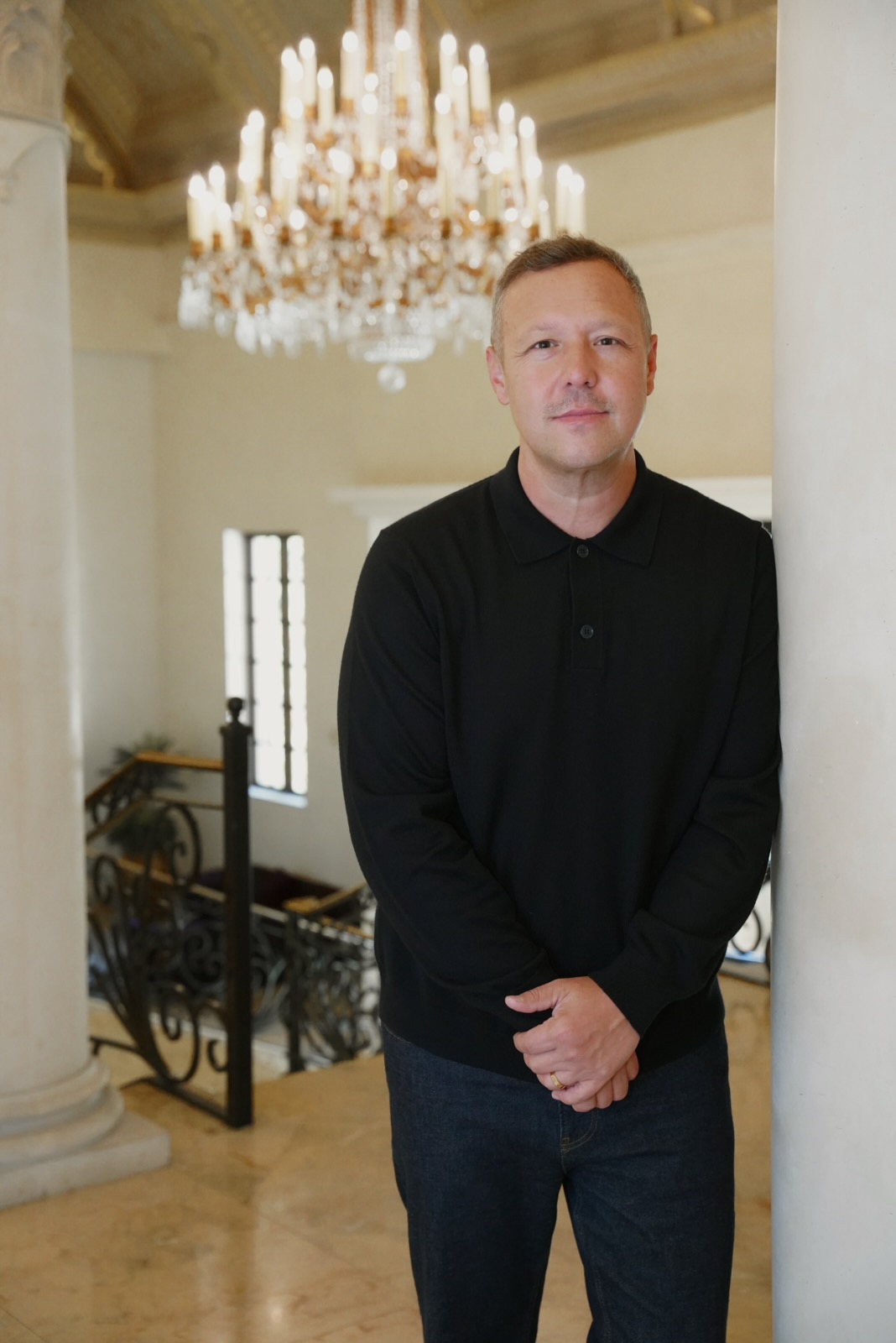
“The Scriptures tell us that ‘we comfort those with the comfort we have received from the Lord,’” he says. “This is where our compassion and grace grow.”
Rather than viewing struggle as something that disqualifies a leader, Chavez believes it can become part of what makes leadership authentic. “People don’t need perfect leaders who have never faced anything. They need real people who serve a real God in a real world.”
That message stands in contrast to a culture increasingly built around carefully curated images of success. Social media can make accomplishments highly visible while keeping the difficult seasons behind them largely hidden.
“We live in a ‘highlight reel’ culture,” Chavez says. “Showing our best, being our best, presenting our best. But in a world of Photoshop and filters, people are craving real.”
His challenge is not to glorify struggle, but to recognize that it can still hold purpose. “The Scriptures tell us that God uses ‘all things,’ the good, the bad, the ugly. He doesn’t just use our strength, He uses our struggle. Embrace that.”
For Chavez, that belief became deeply personal in 2012, when an unexpected professional setback altered the direction of his life.
“I am honestly here today because I got fired from my job in 2012,” he says. “I would have never quit. I was maybe too loyal to the organization I worked for. I felt rejected, forsaken and lost.”
At the time, there was little indication that the experience would eventually become a turning point. What appeared to be rejection would ultimately redirect his future.
“That valley set me on a course to my destiny,” Chavez says. “I couldn’t see it then, but God was working.”
It is one of the central ideas Chavez hopes readers carry into their own difficult seasons: understanding often comes after the experience rather than during it.
“We are playing checkers, but God is playing chess,” he says. “His ways are higher and not always obvious. Don’t give up.”
The analogy captures the larger message behind What to Do in a Valley. What looks like a setback in isolation may make greater sense when viewed as one movement within a much larger story.
Chavez ultimately wants readers to finish the book with renewed confidence, not necessarily because their circumstances have immediately changed, but because their perspective has.
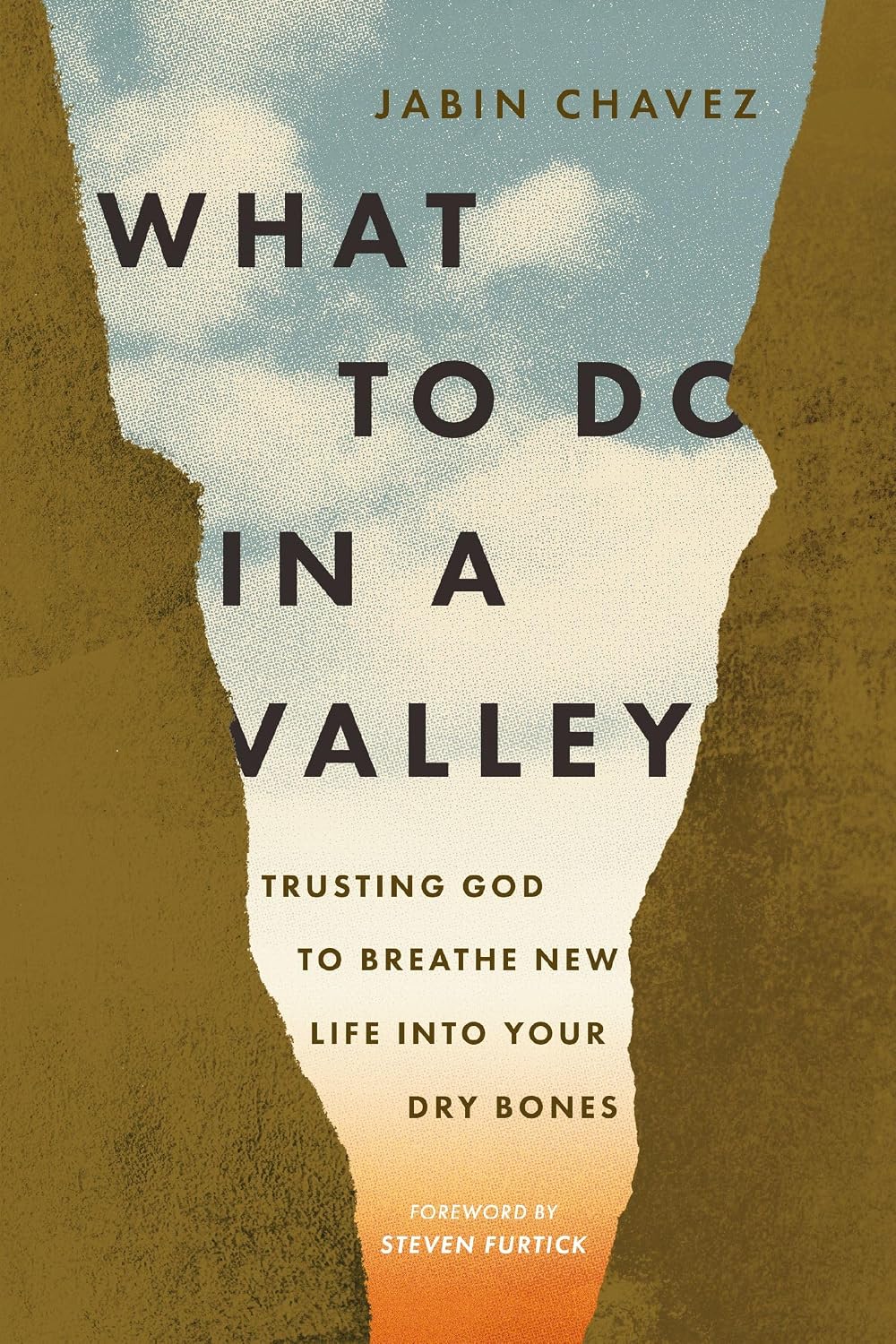
“God is good and with us in every season,” he says. “Psalm 23 does not promise that we will not face a valley. It promises that we will get through it.”
The book concludes by turning to Romans 8 and its message about the enduring nature of God’s love. For someone reading during a season of grief, uncertainty, rejection or disappointment, Chavez hopes those words become more than theology. He wants them to become something they can hold onto.
“God really loves you, God really cares, and God is really working.”
Ultimately, What to Do in a Valley is Chavez’s reminder that difficult seasons do not have the authority to write the final chapter. The valley may be real, and the journey through it may be painful, but neither means the story is finished.
“My prayer is that this will give people a second wind as they face their current season,” Chavez says. “Nothing can separate us from the love of God. No trial, no storm, no valley.”
His final message is perhaps the simplest and most important one of all: “You can make it.”
Discover more at whattodoinavalley.com