
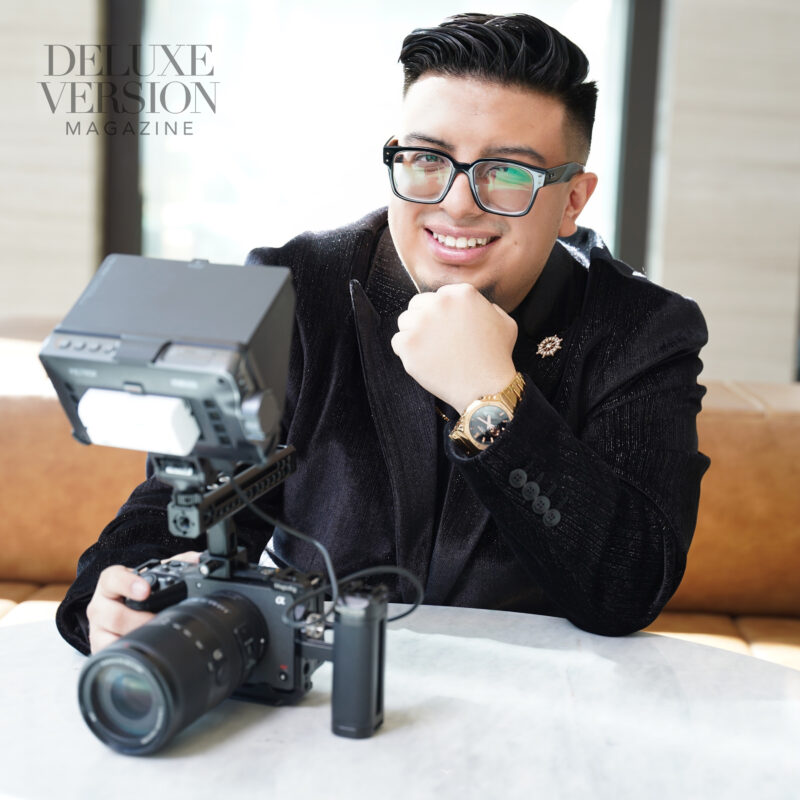
Inside The Creative Process Of Video Storyteller Suriel Cruz
“For me, everything starts and ends with the feeling,” Cruz explains. “Before we even touch a camera or look at lighting, I have to understand the emotional transfer we are trying to create. I ask myself what we want the viewer to feel in their gut the moment the screen goes black.”
That philosophy drives every decision in his production process. While many creators focus on delivering information, Cruz believes emotion is what makes a story unforgettable.
“If the audience doesn’t feel it, they won’t remember it,” he says. “Information informs, but emotion persuades. My process is to dig past the what, the product or service, and find the why. The struggle, the triumph, the human connection. Once I lock onto that specific feeling, every technical choice from color grading to music is designed to deliver that emotion directly to the viewer.”
Cruz approaches editing with a musician’s perspective, drawing inspiration from his background in rhythm and timing.
“I actually approach editing the same way I approach playing the drums. A video has to have a heartbeat. If the rhythm is perfectly robotic it loses its soul. If it’s messy you lose the audience. I look for the pocket, that perfect groove where the cuts feel like natural blinks of the eye.”
For Cruz, great editing should never distract from the story itself.
“Technical precision gives you polish, but intuition dictates the flow. My team and I listen closely to the breath of the speaker and the beat of the music. If a transition calls attention to itself, it’s a failure. The best edit is the one you never notice because you are too busy feeling the momentum of the story.”
In today’s fast moving digital landscape, Cruz recognizes that creators must fight for attention every second.
“We’re living in the scroll past era. You have to earn attention continuously,” he says. “My principle is simple. Respect the viewer’s intelligence, but don’t waste their time.”
That philosophy shapes how he structures every project.
“We deliver value immediately. No long intros. We hit the hook right away. From there the visuals, the audio dynamics, and the pacing must keep evolving so the brain never gets bored. I think of it as a slippery slope. The viewer keeps sliding into the next moment because the narrative tension keeps asking one question. What happens next?”

Cruz’s ability to oversee the entire creative pipeline from concept to post production also allows him to maintain clarity of vision throughout the process.
“Because I already know how I’m going to edit a shot while I’m filming it, everything is intentional,” he explains. “I can visualize the color grading before we set the lights. That holistic approach ensures the final product delivers exactly what we promised at the beginning. The client’s voice does not get lost in translation. It gets amplified.”
Although Cruz embraces cutting edge technology, he maintains strict boundaries about how it should be used.
“I love the gear. I shoot Sony and I’m always looking at the newest technology. But I have a rule. Technology must serve the story, not the other way around.”
For Cruz, tools are only valuable if they strengthen the emotional connection between subject and audience.
“If a visual effect pulls the viewer out of the moment, it becomes a distraction. High end cameras, clean audio, and professional lighting are there to build trust and authority. They are part of the packaging, not the performance. If the tool helps the viewer feel more connected to the human on screen, it stays. If it’s just eye candy, it goes.”
This philosophy becomes especially important when working with founders, CEOs, and public figures who may feel uncomfortable on camera.
“Many leaders feel pressure to perform when the camera turns on,” Cruz says. “My job is to remove that pressure and reveal the real person behind the title.”
He focuses on conversation rather than scripted delivery.
“I listen for the moments when their voice shifts or their eyes light up. That’s when their real authority comes through. Once we capture that authenticity, my role in post production is to polish and present it so their leadership presence is undeniable. The visuals elevate their status, but the message remains completely authentic.”
Looking ahead, Cruz believes the next decade will reward creators who combine cinematic production quality with genuine human storytelling.
“We are entering a time where average content disappears into the noise,” he says. “Cinematic storytelling will become the difference between a commodity and a brand authority.”
According to Cruz, the greatest opportunity for video creators lies in helping leaders reconnect with audiences on a human level.
“The brands that win will combine premium cinematic presentation with real human connection. It’s no longer just about views. It’s about building trust, building legacy, and commanding attention through quality.”